
Generator Installation in College Point
Whole-Home Standby Power, Sized, Permitted, and Installed in College Point by Licensed Master Electricians
Few investments protect a College Point home the way a properly installed standby generator does. When the power goes out, you find out fast whether your backup system was done right. Standtech Electric serves homeowners throughout College Point with generator installation that covers every phase of the project, from the initial load calculation through the final inspection sign-off. Our licensed and insured master electricians handle equipment selection, permit filing, transfer switch installation, fuel line coordination, and commissioning testing. With roots going back more than 25 years in the electrical trade and operations launched in 2013, our team installs standby generators from Generac, Briggs & Stratton, Cummins, and Kohler, as well as FranklinWH battery storage systems for homeowners who want layered backup. The finished product starts automatically, carries the load it was built for, and passes inspection without a return visit.






Contact StandTech Electric today!
Connect with us for reliable, innovative electrical solutions.
Generators - Website Form


CLIENT REVIEWS
WHAT OUR CLIENTS ARE SAYING
I had Standtech work on two projects for me. I found the price quoted highly competitive with others I sought estimates from. Both of the project I contracted with Standtech for were completed on time and on budget. The work was performed as specified and those who did the work arrived on time, went about their business in highly professional manner, completed the work to my satisfaction and left things neat and clean. I was very satisfied with the work Standtech did on the two projects I hired them for and wouldn't hesitate to hire Standtech again.
What a Generator Installation in College Point Actually Protects You From
College Point sits along the East River and Flushing Bay, and the weather that rolls through that corridor can take the power down without much warning. An outage here is not simply a few dark rooms. It is a sump pump that stops running while water rises. It is a chest freezer full of food counting down. It is a home office in a neighborhood where many residents commute or work remotely, suddenly cut off in the middle of a deadline. It is a well pump, a medical device, or a heating system failing on a cold February night near the water. A correctly installed standby generator removes that entire category of worry. The unit watches your utility feed around the clock. When service drops, it starts on its own and transfers your home over within seconds. No extension cords. No gas cans. No need to be standing in the driveway when it happens. When utility power returns, the system transfers back and shuts itself down.
That is the real value of the installation. Not a machine on a concrete pad near your fence line, but the ability to stop factoring outages into your plans along the Flushing Bay waterfront altogether.
What's Included in a Generator Installation in College Point
From StandTech Electric
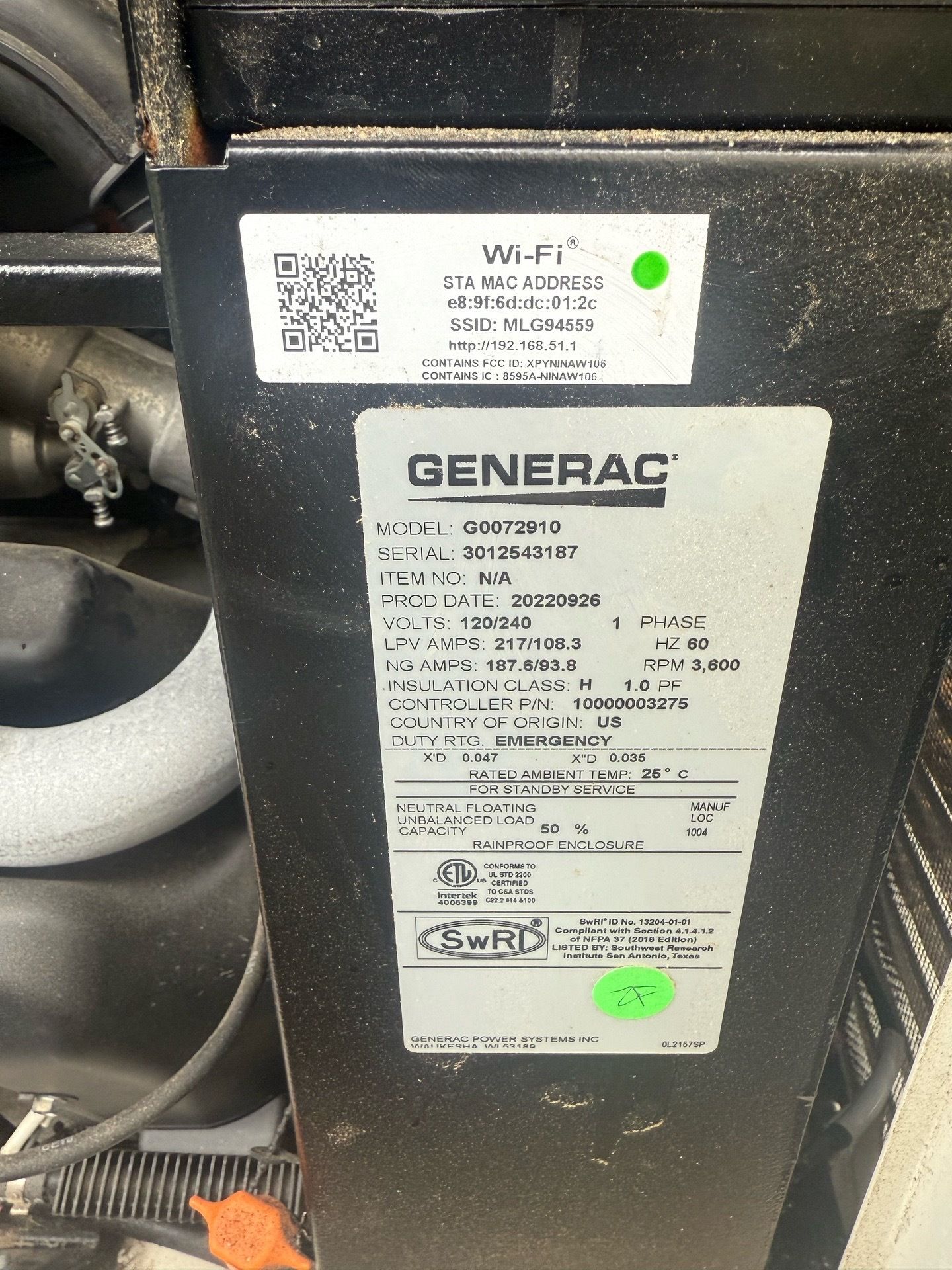
- On-site power load assessment. We walk your College Point property, account for startup surge from air conditioning compressors, sump pumps, and other high-draw equipment, and size the unit against actual demand rather than a round number someone estimated over the phone.
- Equipment selection guidance. Generator options are reviewed against your load profile, available fuel, site constraints, and budget, with the tradeoffs explained in plain language so you can make a confident decision.
- Permitting and inspection coordination. We prepare and file the required permits through the relevant New York City or Queens County authorities and see the project through inspection without putting that burden on you.
- Code-compliant placement. Setback distances from walls, windows, vents, and neighboring property lines are governed by fire and building code. In a tightly built neighborhood like College Point, we verify placement carefully and site the unit correctly from the start.
- Automatic transfer switch installation. This component isolates your home from Con Edison's grid before the generator powers anything, which is a safety requirement, not an optional upgrade.
- Fuel line coordination. Whether your home uses natural gas service or propane, we verify that your existing supply line can support the added load before any equipment gets ordered.
- Electrical panel integration. If your panel needs an upgrade to cleanly accommodate the new system, you hear about it before the generator arrives on site, not after.
Ready to talk through your home's load? Call (516) 407-3737 or schedule a free consultation.
Generator Brands We Install in College Point and How the Right One Gets Chosen
Generac
Kohler
Cummins
Briggs & Stratton
FranklinWH
Contact our generator experts today at (516) 407-3737 to schedule an appointment!
Your Generator Installation in College Point, Step by Step
Knowing the sequence removes most of the anxiety from a project like this.
- Consultation and load assessment. We walk the property, review your panel, and determine whether essential-circuit coverage or a whole-home system fits your situation. This is where the right size gets established, not guessed.
- Proposal and equipment selection. You receive a scoped estimate with the unit, the transfer switch, the electrical work, the fuel work, and the site preparation itemized so you can see exactly what you are paying for.
- Permitting. We prepare and submit the required documentation and coordinate with New York City building authorities and the relevant utility.
- Site preparation. Pad work, clearances, and any grading or drainage adjustments needed to meet code and keep the unit accessible for routine service in College Point's variable weather.
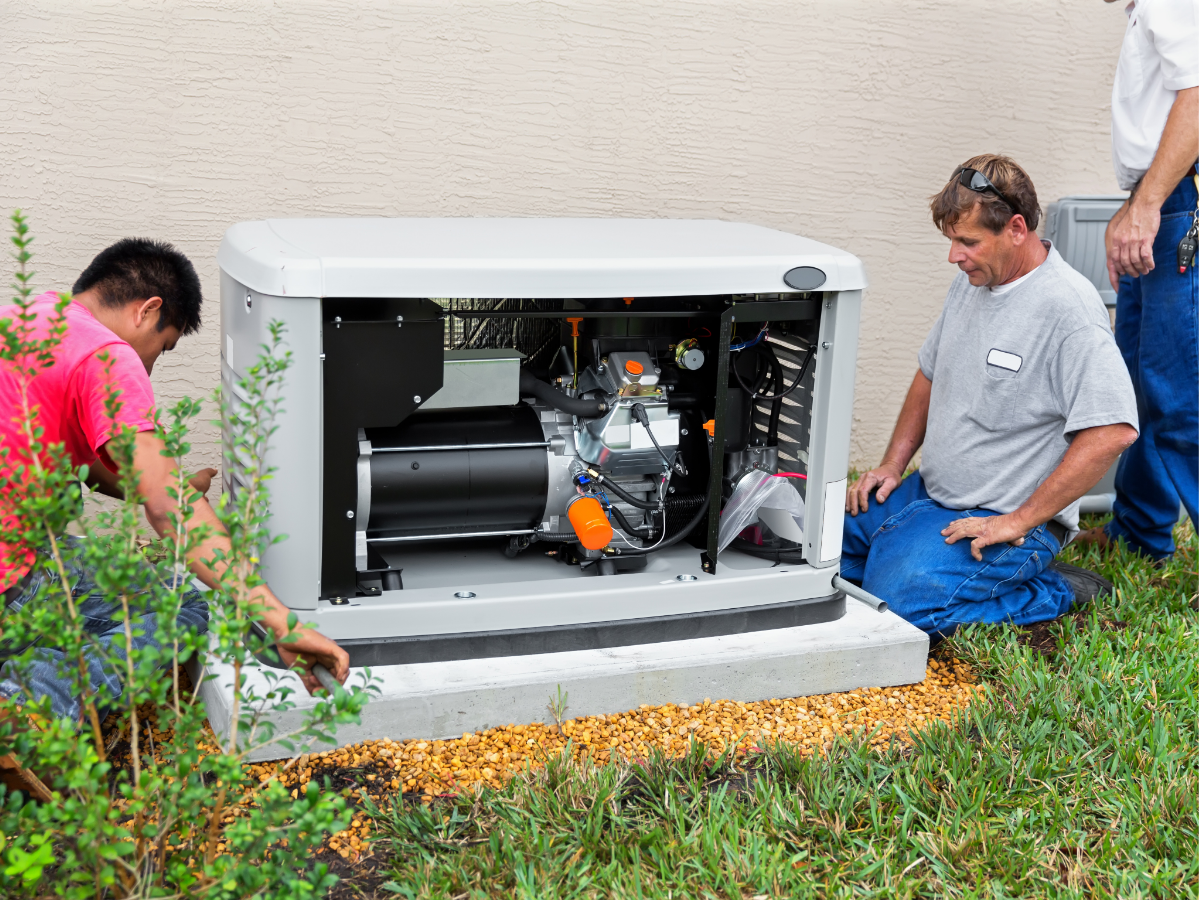
- Installation. Generator set, transfer switch wiring, panel integration, and fuel connection, completed in a focused window once materials and approvals are confirmed.
- Inspection, commissioning, and walkthrough. The system is tested under load, inspected, and handed over with a clear explanation of exercise cycles, maintenance intervals, and how to monitor performance remotely.
Signs Your College Point
Home Is a Strong Candidate for Generator Installation
Some College Point households benefit from backup power more than others. You are likely in that group if any of the following apply:
- Your basement depends on a sump pump and you live near the tidal flats where storm flooding is a real seasonal concern
- Someone in your home relies on powered medical equipment, climate control, or mobility devices
- You work from home and cannot absorb hours or days of lost connectivity
- Your water comes from a well, which means no electricity means no running water
- You have experienced more than one multi-day outage in recent years
- You have already lost a refrigerator or freezer full of food to an outage
- You have added significant electrical load recently, such as an EV charger, heat pump, or finished basement
- You own an aging generator that is failing exercise cycles or is no longer sized for your current home's demand
Pairing Generator Installation in College Point With Battery Storage
Most electrical contractors install generators. Fewer have the fluency to explain how a generator, a battery storage system, and your electrical panel work together as one coordinated system serving your College Point home.
StandTech Electric works across the full backup power landscape, including battery energy storage systems, Tesla Powerwall, Anker SOLIX, and FranklinWH. That matters because the two technologies solve different halves of the same problem. A battery covers short interruptions instantly and silently, with no fuel consumption and no engine noise for a brief blip. A generator carries long-duration outages that would drain a battery, running as long as fuel is available.
What Drives the Cost of a Generator Installation in College Point
- The capacity of the unit, which is determined by your load assessment
- Whether you are covering essential circuits or the whole home
- The distance between the generator location and your electrical panel
- Whether new gas line work, a meter upgrade, or a propane tank is required
- Site preparation, including pad work, access, drainage, and clearance corrections
- The condition and capacity of your existing electrical panel
- Permit and inspection fees, which vary by New York City jurisdiction
Why Homeowners Choose StandTech Electric for Generator Installation in College Point
Generator installation crosses electrical work, gas work, concrete work, municipal permitting, and utility coordination. In a New York City borough neighborhood like College Point, where Con Edison is the utility and NYC building departments handle permits, the contractor you hire needs to be credible across every one of those areas.
Standtech Electric has been serving the area since 2013 with a team carrying more than 25 years of hands-on electrical experience, and we hold master electrician licensing and full insurance. We are backed by Authority Brands and its national support network, which gives a locally operated team access to resources most independent contractors cannot offer. Our electricians are experienced, courteous, and drug-tested, and we offer 24/7 emergency service for the times when waiting until morning is not practical along a waterfront neighborhood like College Point.
We also do not hand the consequential parts of your project to someone else and hope for the best. Our team manages permitting with New York City agencies, coordinates with Con Edison, and handles the installation itself. Clients consistently describe working with us in similar terms: organized, communicative, clean, and transparent about options and costs. One homeowner noted that we managed everything from recommending the right equipment through securing final permits without once leaving them guessing about next steps. That is the standard we bring to every generator installation in College Point.
What Ownership Looks Like After the College Point Install
The value of a correctly installed generator continues building long after the crew wraps up. A properly sized unit runs within its designed operating range, which means lower fuel consumption, less wear on the engine, and a significantly longer service life than an undersized generator pushed to its limits every time the lights go out along the Flushing Bay corridor. A permitted and inspected installation creates no complications when you refinance, sell, or file a claim with your homeowner's insurer. And when you eventually need service, a panel upgrade, or added capacity, you are calling a team that already knows your College Point home's complete electrical setup.
Frequently Asked Questions About Generator Installation in College Point
How long does a generator installation take from start to finish?
The physical generator installation is usually the shortest part of the process. Once permits are approved and the equipment is on site, most residential installations, including pad work, electrical connections, transfer switch wiring, and fuel line work, are completed in a concentrated window of a day or two for a typical home. The full timeline from your first consultation to a commissioned, inspected system generally runs longer, because permitting timelines, inspection scheduling, and utility coordination are controlled by outside parties. Complex sites, panel upgrades, or new gas service can extend it further. StandTech Electric gives you a realistic timeline at the proposal stage based on your specific jurisdiction and scope, and we keep you updated as each milestone clears rather than leaving you to wonder where things stand.
What size generator do I need for my home?
Correct sizing depends entirely on what you want running during an outage, and it is the single most important decision in a generator installation. A system covering essential circuits, meaning your refrigerator, furnace or boiler controls, sump pump, well pump, and some lighting, requires far less capacity than a whole-home system running central air conditioning, an electric range, and every room at once. Sizing also has to account for inrush current, the brief surge that motors draw at startup, which can be several times their running load. This is why the 80 percent rule matters: a generator should not be continuously loaded past roughly 80 percent of its rated capacity, because sustained operation near maximum accelerates engine wear and shortens equipment life. Our electricians perform a full load assessment before recommending any unit so your generator operates comfortably within its designed range.
Can I just plug a generator into my house during an outage?
No, and this is genuinely dangerous rather than merely against the rules. Connecting a generator to your home without a transfer switch, whether through an outlet or directly into the panel, can cause backfeeding, where electricity travels backward through the utility lines. Backfeeding can energize lines that utility crews believe are dead, and it can cause fires and equipment damage inside your own home. It also violates electrical code. A permanent generator installation requires an automatic transfer switch, which physically disconnects your home from the utility grid before the generator supplies any power and reconnects only after utility service is confirmed stable. There is no compliant shortcut around this component, and any contractor willing to skip it is not one you want touching your electrical system.
Should I repair my existing generator or replace it?
It depends on age, service history, and whether the unit still fits your home's electrical demand. Generators are engines, and like any engine they reach a point where accumulated repair costs exceed the value of the machine. If your unit is well past a decade of service, requires repeated service calls, fails its scheduled exercise cycles, or was sized for a home you have since expanded with an EV charger, a heat pump, or a finished basement, replacement is often the better long-term decision. If the unit is otherwise healthy and the issue is a battery, a controller, a transfer switch fault, or a wiring problem, repair usually makes more sense. StandTech Electric evaluates the existing system, explains what we find, and gives you an honest recommendation rather than defaulting to whichever option is larger.
What kind of maintenance does a standby generator need after installation?
Standby generators are designed to sit idle and then perform flawlessly on demand, which is exactly why maintenance matters. Most units run a scheduled self-exercise cycle to circulate oil and keep the engine ready, and that cycle is set during commissioning. Beyond that, generators need periodic oil and filter service, battery inspection and eventual replacement, air filter and spark plug attention on the manufacturer's interval, and a general check of the transfer switch, connections, and enclosure. Batteries are the most common cause of a generator failing to start when needed, which is why they are worth checking rather than assuming. As a full-service electrical contractor, StandTech Electric can address not only the generator itself but any panel, wiring, or transfer switch issue contributing to a problem, so you are not coordinating between multiple companies to solve one fault.
Talk to Our Generator Installation Experts at (516) 407-3737
OUR SERVICES
INTERESTED IN OUR SERVICES?
We want to know your needs exactly so that we can provide the perfect solution. Let us know what you want and we’ll do our best to help.